
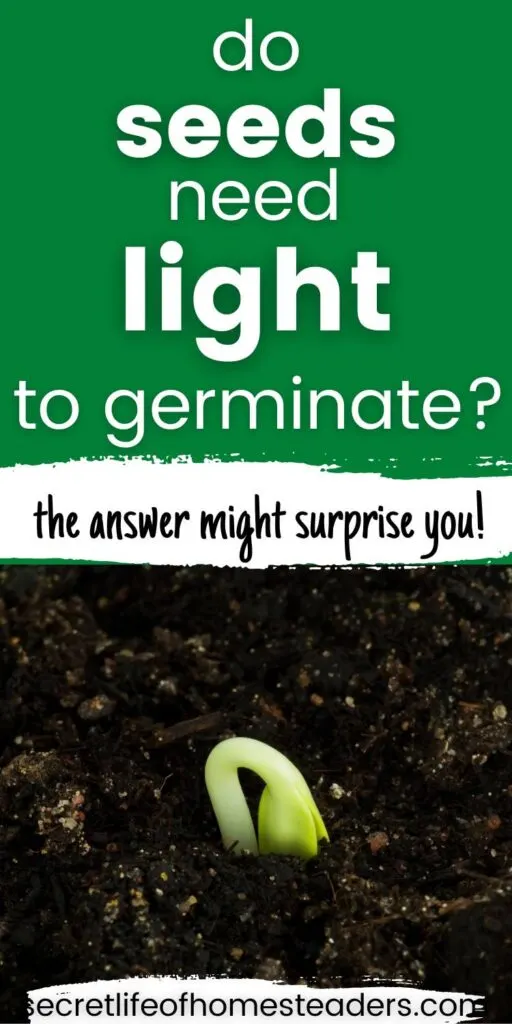
If you’re looking at how and when to start seeds indoors (and outdoors), you might be asking yourself do seeds need light to germinate?
When you are starting seeds, there is a lot to consider. Growing mediums (soil, rocks, pots, etc), moisture levels, and of course light all come into play. Not everybody has the space or the finances to introduce a grow light, especially for what may only be a temporary setup.

So what is the consensus? Do seeds need light to germinate? Today we’ll explore the answer to that question as well as various options and necessities that you must consider when starting a garden.
This article may contain affiliate links. Please see our disclosure policy for more details.
Do Seeds Need Light to Germinate?
Have you ever wondered if light is necessary for seeds to germinate? The answer might surprise you!
While light is a critical part of the photosynthesis process for seedlings and plants (most varieties anyway), light is actually not necessary for seeds to germinate.


Seeds germinate best when placed in a dark and wet place. Many seeds prefer darkness in the very beginning! This may include a jar or container of water or this may include a container with soil that is kept moist.
Keep in mind, however, that once germination occurs and seedlings begin to sprout, light is now going to be a necessary component. Without light, your little sprouts will go from green to white and then whither and die.




Light must be introduced in order for seedlings to photosynthesize and grow big and strong. For most varieties of plants, you will know your seedlings are getting enough light by their coloring. White or light green seedlings and plants need more sunlight or UV light. Green seedlings are getting plenty of light.
But for the beginning stages of gardening, no, seeds do not need light to germinate. Seeds germinate regardless of light levels so feel free to plant seeds wherever it’s easiest and most convenient for you!
Growing Requirements for Seeds
What is required for starting seeds?
Starting seeds may seem intimidating but it’s really quite simple! All you need to do is provide your seeds with the best environment possible – and that includes starting off with a suitable growing medium, plenty of moisture, and once germination has happened, plenty of light.


Necessary Growing Requirements for Starting Seeds:
- Growing Medium (Something in which your seed’s roots can take, well, root!)
- Moisture (Be sure to research the proper levels of moisture required for each seed you start – but in essence, water is necessary for all seeds and plants.)
- Light (Once germination has happened and the seedling has broken through the protective shell of the seed, light is going to be a critical component. The amount of light you need will be determined by each individual seed.)
Planting a garden can be incredibly rewarding so why not give starting your own seeds at home a try? You might be pleasantly surprised at what you may grow!
Temperature and Moisture Levels
Starting a garden from seed can be an exciting and rewarding experience. It is also a great way to save money on your homestead by avoiding the cost of purchasing young plants from nurseries.
But before you get started, it’s important to understand how temperature and moisture levels can affect your seeds’ ability to germinate successfully.
While each individual seed will require its own composition of temperature and moisture levels, for the most part, you can expect your tiny seeds to thrive in temperatures of 50-70 degrees F (10-20 degrees C). If temperature conditions are too hot or too cold, your germination rights will drop.


For better germination, try to keep temperatures moderate and comfortable.
By understanding basic principles such as the ideal soil temperature for different types of seeds, when they need light, and how much water they require, you’ll have a better chance of success in growing healthy plants that will thrive in your garden.
As far as moisture levels go, the soil should be kept constantly moist but not waterlogged (nobody wants rotted seeds).
Appropriate Growing Mediums
What is an appropriate growing medium for your seedlings?
The goal of the growing medium is to A – give the roots something to hold onto (support) and B – help retain the proper levels of moisture for the seeds, seedlings, and eventually, the plants.
For most gardeners, this includes growing mediums such as potting soil, compost, and even rockwool. Some gardeners may choose to use peat moss as well, but it is important to ensure you know the pH of your soil before doing so.


It is also important to follow recommended planting depth for each of your seeds. (This information can be found online or on your seed packets.)
Other gardeners, including those who engage in aquaponic and hydroponic gardening systems, use growing mediums such as rocks (including lava rocks) and even gravel.
It’s important to remember that the growing medium you choose should be properly aerated and also absorbent so it can retain the appropriate levels of moisture needed for your seedlings.
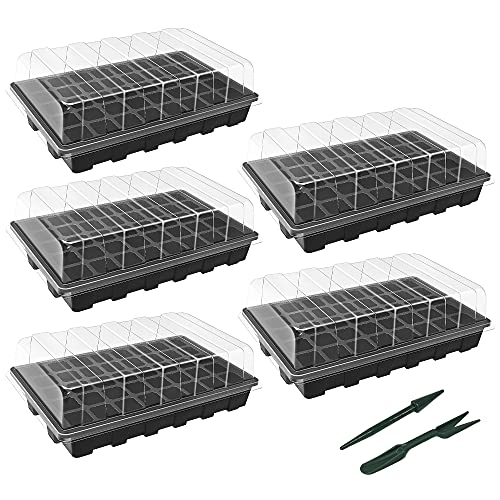
Next comes the question of what to put your growing medium in. Where should you plant your seeds? There are plenty of DIY seed starting containers you could explore, or you could buy a seed tray in which to watch your young seeds sprout.
The Role of Light in Seed Germination
Once you have your growing medium and moisture levels sorted out, you may be asking yourself – do seeds need light to germinate?
The answer is no. In fact, most gardeners prefer to keep the seedling trays in a dark environment until the seedlings have broken through the protective shell of the seed and are ready for light.
While seed light requirements are minimal to null, it is a fact that once they begin to sprout, seedlings require sunlight for proper seedling development.


Once they’ve germinated and the seedling is ready to be exposed to light, it’s important to introduce your new plants to a consistent source of light – preferably natural sunlight. If that isn’t available, grow lights are an excellent option as well.
If you don’t have access to a grow light or a full sun (or even partial sun) window for your young garden, moving your seedlings outside is a great way to ensure they get the proper amounts of light.

If it’s not quite warm enough in your area to keep your seedlings safe and warm, cutting a milk jug in half and placing it on top of your plants will provide a safe little greenhouse that will extend your growing season by up to several weeks.
This method is perfect for areas where the amount of time between the guaranteed last frost and the scorching heat of the summer is too short. In lots of growing zones, many seeds and plants struggle with late frosts or extreme heat so getting plants outside as soon as possible is give you your best chance for success.
Temporary greenhouses will accomplish this for you. Just be sure to follow the specific instructions for each type of seedling to ensure they get the right combination of light, water, and temperature.
With proper care and attention given to your seedlings early on in their life cycles, you’re sure to have a thriving garden full of vibrant flowers and delicious vegetables in no time!
The Benefits of Using Grow Lights
Grow lights artificial lights that include the proper UV rays and spectrums that plants need to photosynthesize. While fluorescent lights are better than total darkness, they are not the same as official grow lights.
Many gardeners find grow lights useful in providing the exact spectrum of light the plants need to grow. These artificial lights can even be used to extend the growing season from the safety of your home or greenhouse.


When used correctly, grow lights can stimulate growth in seedlings far beyond what natural sunlight is capable of. This means indoor gardeners don’t have to worry about their plants getting enough light to grow, as the grow lights will provide a consistent source of illumination.
Grow lights are also perfect for starting seeds indoors during the colder winter months when natural sunlight is often lacking. Whether you’re looking to extend your growing season or just hoping to get a head start on your spring and summer gardening projects, investing in a good grow light is definitely worth the cost.
Overall, when it comes to seed germination, there is no one-size-fits-all answer. Every plant and growing medium requires different levels of attention and care in order for your seeds to sprout successfully.


While investing in a good grow light can be beneficial in providing the exact spectrums and intensity of light needed for successful germination, in most cases, it is not necessary.
Just be sure to closely follow the instructions and guidelines for each type of seed you’re planting, and you’ll have a beautiful garden in no time!
More Gardening Resources
For more gardening resources and ideas, check out the following resources:
How to care for basil plants
How to plant and care for beans
When to start seeds
Good luck with your gardening projects!


Charlene has been dabbling in and learning about the homesteading lifestyle for almost 20 years. She recently started a real-world homestead with her extended family and is excited to share 20+ years of knowledge and experience with the world!
While she certainly doesn't know everything about homesteading and is learning more every day, she is excited to learn and grow along with YOU!
Charlene blogs about about homesteading at https://secretlifeofhomesteaders.com/.
Estelle Forrest
Thursday 25th of May 2023
Lots of great information is shared here. Thanks for linking up on SSPS, hope to see you again next week.
Esme Slabbert
Wednesday 24th of May 2023
Thank you from your Vroom Vroom Team for sharing your links with us at #262 SSPS Linky. Please check back weekly to see if featured on the blog post or by any of the co-hosts.
Natasha Mairs
Tuesday 23rd of May 2023
I have recently planted some seeds and some are starting to come through. But I never knew that seed didn't need the sunlight until they sprouted.
Charlene Hess
Friday 26th of May 2023
Pretty cool, huh?