
When considering when to start seeds (both indoors and outdoors) knowing how to plant and grow beans is an important part of the process.
While the idea of planting a garden might be a great way to start a homestead, there is more to gardening than just throwing a starter seed in the ground and watching it grow. If you’re wondering how to plant and grow beans (pole, bush, shelling), then this how-to guide is for you!
This article may contain affiliate links. Please see our disclosure policy for more details.


Free Garden Planning Worksheets
If you’re ready to plan your garden, you want to make sure you get started right!
Grab my free Garden Planning worksheets today and let me guide you through everything from planning, starting, planting, harvesting, and troubleshooting your garden.
Grab your Garden Planning Worksheets for free NOW!
Why Plant Beans In A Garden?
Beans are a wonderful addition to any garden plot. They’re easy to grow and provide an excellent source of protein, too!
Top 3 Benefits of Learning How to Plant And Grow Beans For Your Garden
- Great Source of Fiber: Beans contain both soluble and insoluble fiber, so they help promote healthy digestion and regularity.
- Great source of Protein: Beans also provide an excellent source of protein – one cup contains between 12 and 17 grams of protein, which is an important building block for things like muscles and skin.
- Easy To Grow: Beans are a great addition to any garden because they’re easy to grow! Planting beans in your garden can help you build soil fertility over time, too.
Related – How To Plant Beets and Turnips
How To Choose A Bean Seed
The first thing you should do when preparing to plant beans in your garden is look up your planting zone. Every region has a specific planting zone. This can easily be found by looking at the USDA plant hardiness zone website.
Just zoom in to your specific location and the map will tell you which zone number you are. Use this number when searching for seeds and plants to include in your garden and you will have an easier time finding plants that will thrive in your region’s temperature.
Once you have determined your planting zone, you will also want to decide on which variety of beans you want to include in your garden.
There are SO MANY different varieties of beans to choose from! The specific ones you should go with are completely up to you.
Here are just a few bean varieties:
- Blue Lake
- Kentucky Wonder
- Romano
- Emerite
- Harvester
- Greencrop
- Kwintus
- King of the Garden
- Black Turtle
- Navy
- Scarlet Runner Beans
This list of bean varieties is just a drop in the bucket! There are hundreds of bean varieties available to choose from, and each brings something unique to the table (literally!). Do your research and decide which bean works best for your family situation.


Pole Beans VS Bush Beans VS Snap Beans – What’s The Difference?
While researching beans, you might come across various terms that you are unfamiliar with. Namely, pole beans, bush beans, and snap beans. What do these terms mean and what’s the difference between these bean plants?
Pole Beans
Pole beans are typically grown on a tall, pole-like structure and need lots of room to grow. Pole beans plants can be trained up a trellis or other tall support system so that they don’t take over the entire garden space.
Pole beans can grow up to vining heights of eight feet. These plants also produce longer pods than bush beans.
Bush Beans
Bush beans do not need any sort of trellis and often stay at about 2 feet tall. These beans are the most common variety in grocery stores. They are typically much easier to grow than pole beans, but they will take up a good amount of space in your garden.
Bush beans grow on low growing plants that typically reach between 24 and 36 inches in height. These plants also produce small pods that require harvesting every day or two.
Snap Beans
Snap beans are just what they sound like – when you break or snap them, they become edible! Snap beans have an immature seed pod right before the seeds are fully developed. They are very easy to grow and have a shorter, bushier plant structure than both pole beans and bush beans.
Shell Beans
Shell Beans – Another type of bean is shell beans, which means that once harvested the pod dries and the seed is removed. Some of the most popular shell beans include pinto beans, black turtle beans, cranberry beans, and garbanzo beans.
One thing to remember is that you can plant any variety of bean next to the other, with one exception: snap beans should be planted away from pole beans because there might be some confusion between the two types of beans.


When And How To Plant Beans
You may be wondering what the best time to plant beans is in your region. This can vary depending on your specific climate, but there are a few things to keep in mind when it comes to planting beans:
Don’t plant any type of bean seeds if you have had a frost within the last 10 days.
It is best to plant beans at least 2 weeks AFTER the last frost of spring has occurred. This will give the bean seed enough time to germinate and begin to grow, but it won’t be too much later once summer starts heating up.
Beans require a lot of sunlight in order to thrive so be sure to plant your beans in a sunny location. The soil you plant your beans in should be enriched with organic material (such as compost). Soil should also be loosened for best results.
When planting your bean seeds directly in the soil, press soil firmly over seeds and keep the area moist.
If desired, you can choose to soak your bean seeds in water for a day or two before planting but this is not necessary. Soaking your seeds just gives you a chance to see which seeds are viable so you only plant good seeds.
Once your beans have “flowered” it means they are actually ready to produce bean pods! Typically, flowering happens about 60 days after you have planted your seeds.
How To Care For Bean Plants
Once you have plated your beans, it is very important to keep the soil moist. However, be sure not to overwater your beans either! Find a nice, happy medium between too wet and too dry.
And as always, make sure your plants have plenty of sunlight! Beans love direct sunlight.
If you have planted pole beans, you need to make sure your bean plants have something that they can climb. This could include a trellis, a fence, or another pole or structure. Failure to do so will result in broken and snapped vines.

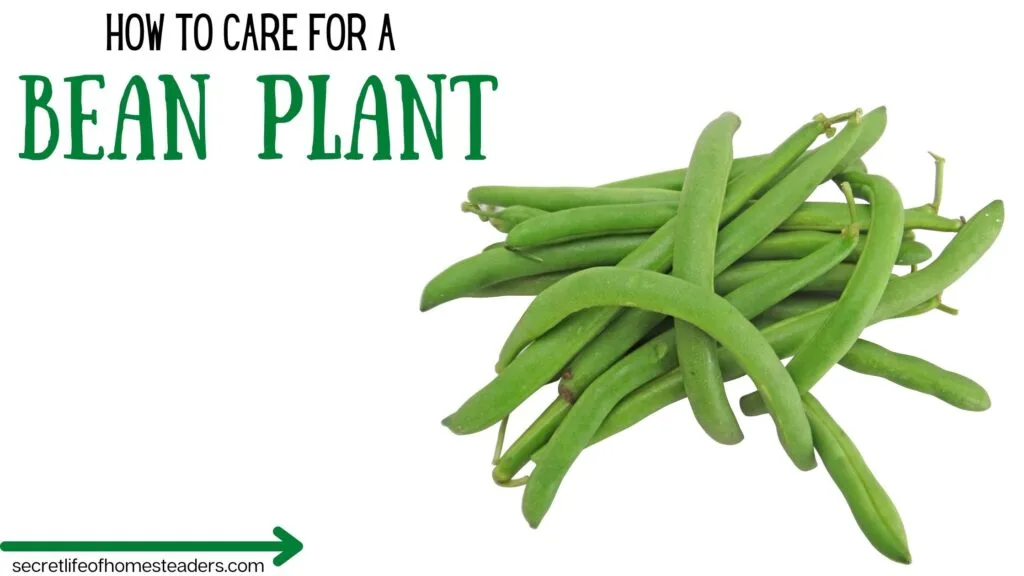
When And How To Harvest Beans
When researching how to plant and grow beans, it is only natural to wonder when and how to harvest said beans. So when do beans go from being a plant to becoming a meal?
There are a few different signs that signal when you should harvest your beans. First of all, the pods will begin to wrinkle and curl up as they mature. Secondly, there may be a slight color change from bright green to dark green or brown. And finally, the pod might split open.
These are all signs that your beans are ready to be harvested!
When you are ready to harvest your beans, you must be careful not to damage the new blossoms. Only pick the bean without hurting any other parts of the plant.
When you begin harvesting your beans, it is best to do so earlier rather than later. This will ensure that you have plenty of time before the fall frost hits – allowing for optimal bean production within your garden.
To harvest your beans, you simply pluck them off the vine when they are ready! Make sure to choose mature pods that are bright green in color and have a strong scent. Leave any yellow or spotted pods on the plant because the taste will be weaker.
Pick your beans before they get too ripe for the very best texture and flavor. Overly mature beans will be stringy
Additionally, it is important to only pick your beans when they are dry. If your plants are wet, harvesting the beans will result in damaged plants and not-so-appetizing beans. If it has recently rained or you have recently watered, wait for another day.
How To Store Beans
Once you have a beautiful bean harvest, it’s time to figure out how to preserve and store your crop.
One popular choice is canning. Canned beans are delicious and can last for years when stored properly (cool, dry place).
Make sure the beans are completely submerged in water and heated to at least 220 F in order for them to be safe and edible. If you’re not comfortable with canning, freezing beans is also a great option.
Be sure to use freezer bags or containers when freezing your beans. This will help prevent them from getting freezer burn and becoming unusable when they’re ready for cooking!
Don’t forget that when you cook the frozen beans, add a little salt in order to give the beans more flavor.
Another option is dried or dehydrated beans. Dried and dehydrated beans can also last for years when properly stored (cool, dry, air-tight place). To dry or dehydrate your beans, simply lay them out in a single layer in a dehydrator and let them dry for 6-10 hours.
When you’re ready to rehydrate, just add them to soup or soak them in water for a few hours, and voila! Instant beans!
How To Collect Bean Seeds For Future Planting And Growing Seasons
If you have a favorite type of green bean, it is helpful to collect the seeds for this green bean in order to plant them again next year.
This will save you on total cost and effort during planting – and means that your beans will grow healthier and bigger overall (and taste better!).
It’s always best to save seeds from heirloom and open-pollinated varieties because these beans will reproduce true to the type that you already have.
To Collect Your Seeds:
Keep the bean pods on the vines for as long as possible. They must be dried out completely to allow for proper seed collection and storage.
When you are collecting beans for seeds, you’ll want to select bean pods that are dry, long, and healthy. The best pods will rattle when shaken.
As soon as you see them beginning to dry, check the pods daily to harvest the ripe beans. Once they are fully dried, remove any remaining beans from the pod and store in an air-tight container or bag until the next planting season!
Free Garden Planning Worksheets
Do you need help planning out your garden? It’s never too early (nor too late) to start planning your garden.
We can help take the stress, anxiety and overwhelm out of garden planning with our free Garden Planning Worksheets.
Make planning your garden easier than ever with your very own copy!
Learn what’s inside the free printable gardening planner here.
Or Grab your free Garden Planning Worksheets NOW!!


Charlene has been dabbling in and learning about the homesteading lifestyle for almost 20 years. She recently started a real-world homestead with her extended family and is excited to share 20+ years of knowledge and experience with the world!
While she certainly doesn't know everything about homesteading and is learning more every day, she is excited to learn and grow along with YOU!
Charlene blogs about about homesteading at https://secretlifeofhomesteaders.com/.