
If you know anything about taking care of chickens, you know that egg laying season tends to have ebbs and flows. This is why every backyard chicken owner should know how to preserve eggs long term.


Chickens tend to stop laying eggs when the weather is not to their liking. Be it cold and dark or way too hot and humid, most chickens take a few months hiatus from egg laying throughout the year.
Eggs are a versatile food item that forms an integral part of many diets worldwide. However, their shelf-life can be a limiting factor.
This article explores several methods for preserving eggs long-term, with a special focus on the waterglassing technique.
This article may contain affiliate links. Please see our disclosure policy for more details.
Understanding Egg Preservation
Before diving into the specifics, it’s essential to understand why egg preservation is necessary. Eggs, like any other food item, can spoil over time due to exposure to air, moisture, and bacteria. This process accelerates at room temperature, which is why most people refrigerate eggs.
However, even in the fridge, eggs won’t last forever. That’s where preservation techniques come in handy.
How Long Are Farm Fresh Eggs Good For On The Counter?
Farm fresh eggs’ shelf-life on the counter depends on a few factors, such as the environment and how they are stored.



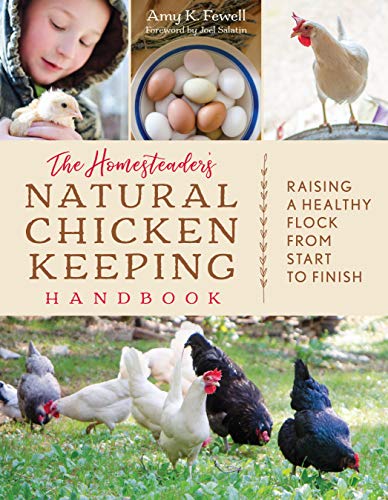

Officially, it is recommended that farm fresh eggs will stay good for about two weeks when kept at room temperature. Our family has had success keeping unwashed, fresh eggs on the counter for 8-12 weeks before spoilage was an issue.
This is because eggs have a natural protective coating called the “bloom” or “cuticle” that helps keep out bacteria and moisture.
How Long Are Farm Fresh Eggs Good For In The Fridge?
Alternatively, it is officially recommended that eggs will stay good in the fridge for 4-6 weeks. Just like with countertop eggs, we’ve had farm fresh eggs last in the fridge for 4-5 months before spoilage was a concern.
The reason for this difference is that refrigeration slows down the growth of bacteria to a far greater extent than storing the eggs at room temperature. It’s crucial to remember that bacteria can multiply rapidly in warmer conditions, which is why eggs spoil faster when kept on the counter.


Moreover, eggs have a natural coating called the “bloom” or “cuticle” which acts as a protective layer against bacteria. Washing farm fresh eggs removes this bloom, reducing their shelf life. So, if your farm fresh eggs are unwashed, they may last longer on the counter.
In summary, while farm fresh eggs can be stored on the counter, it’s far more efficient to keep them in the refrigerator to maximize their shelf life. If you choose to store them on the counter, remember to consume them within two weeks. And, if you have a large batch of eggs, consider preservation methods to extend their usability.
The Importance of Proper Egg Storage
Before we dive into different methods of long-term egg preservation, it’s essential to understand the significance of proper egg storage.
As mentioned earlier, eggs spoil quickly when exposed to air, moisture, and bacteria. Therefore, it’s crucial to store eggs in a cool and dry environment, preferably in a carton or egg holder.

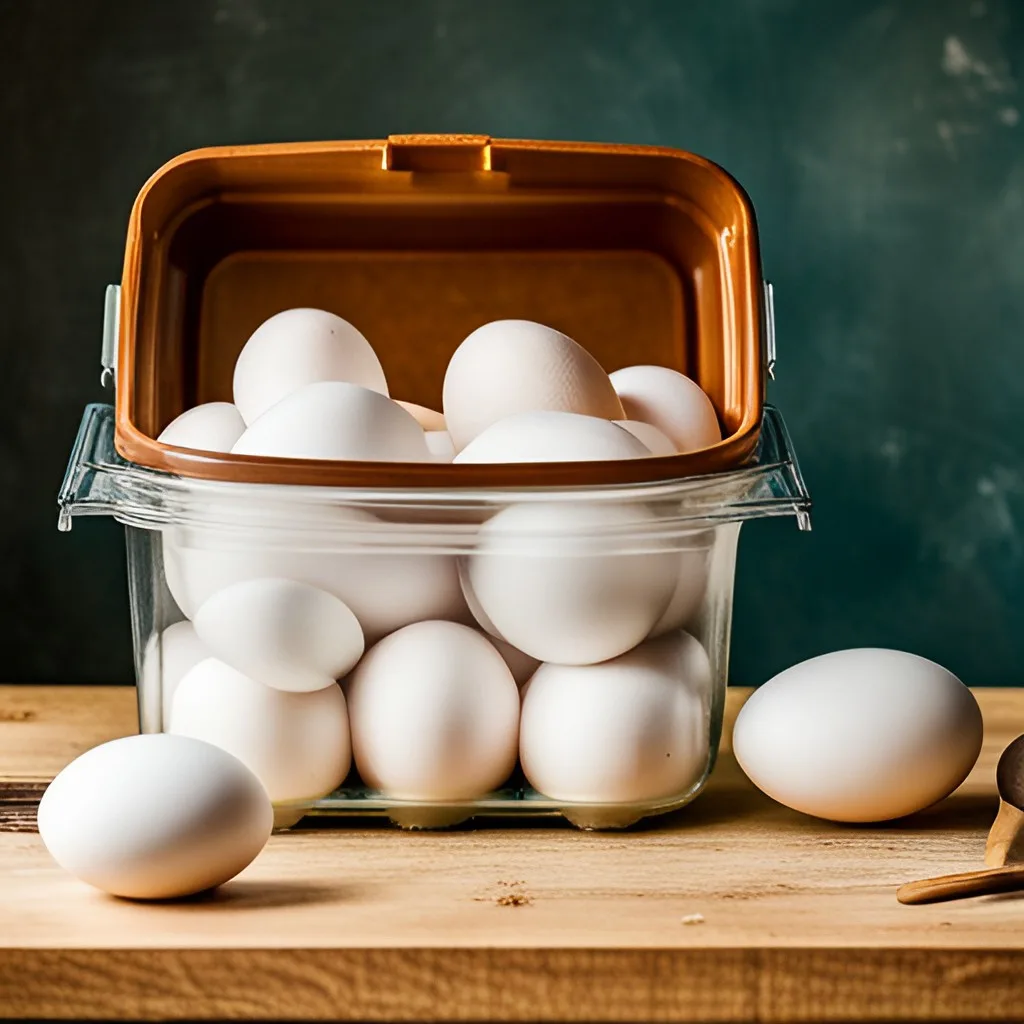
Additionally, it’s essential not to turn stored eggs regularly. Leave them where they’re at, preferably with the pointy side down and the big side up. This prevents the air pocket that is inside the egg from moving around, thus reducing the risk of spoilage.
Moreover, when storing eggs for longer periods, be sure to check them regularly for any signs of spoilage. If you notice an egg with a strange odor or appearance, discard it immediately.
Traditional Methods of Egg Preservation
There are several traditional methods for preserving eggs, including pickling, salting, and dehydrating.
- Pickling: Pickling involves immersing the eggs in a solution of vinegar, salt, and various spices. The acidic environment of the solution helps to kill bacteria, extending the shelf life of the eggs.
- Salting: Here, eggs are preserved by coating them with salt or immersing them in a salt solution (brine). Salt draws out moisture and creates an environment unsuitable for bacterial growth.
- Dehydrating: Dehydrating eggs involves removing all their moisture content, either through sun drying or using a dehydrator. The dried eggs can then be powdered and stored for a long time.
The Waterglassing Method: An Overview
While the above methods are effective, they alter the taste and texture of the eggs. If you’re looking for a way to preserve eggs without changing their fresh-tasting nature, the waterglassing method is the answer.
Pickling Lime (4 oz, ZIN: 524972)Pickling Lime (16 oz, ZIN: 524974) – 3 Pack
Mrs. Wages Pickling and Canning Salt, 3 lbs (Pack of 6)


Waterglassing is a century-old technique that involves submerging fresh eggs in a solution of water and sodium silicate, also known as “waterglass”. Sodium silicate is a compound that, when mixed with water, creates a gel-like substance that seals the eggshells, preventing air and bacteria from entering and spoiling the eggs.
You can easily waterglass your own eggs at home using a large, airtight container and pickling lime. Just be sure your eggs are both clean and unwashed.
How to Waterglass Eggs: A Step-by-Step Guide
Here’s a simple guide on how to preserve eggs using the waterglassing method:
- Collect Fresh Eggs: Freshly laid eggs have a natural protective coating called the bloom, which helps to keep bacteria out. It’s best to use unwashed eggs for waterglassing to maintain this protection.
- Prepare the Solution: Mix one part sodium silicate or pickling lime with nine parts filtered water. You can also use boiled water that has been completely cooled down but this is overkill in my opinion. Stir until fully combined. The solution should be enough to cover the eggs completely when they’re placed in the container.
- Submerge the Eggs: Place your eggs pointy side down in a clean, sterilized container. We keep empty protein powder containers for this purpose but many people use gallon mason jars. Pour your prepared waterglass solution over them, ensuring all eggs are fully submerged. Leave about an inch of liquid above the eggs.
- Store Properly: Seal the container and store it in a cool, dark place. The eggs should remain fresh for up to two years if stored correctly.
- Before Use: Rinse each egg thoroughly under running water before use to remove any residual solution.
Shelf Life of Waterglassed Eggs
According to online sources, when preserved using the waterglassing method, eggs can last up to two years if stored properly. We have personally had success with 12-18 months. (we’ve never attempted to store eggs for longer than this time limit so I can’t say as to how much longer they will last.)
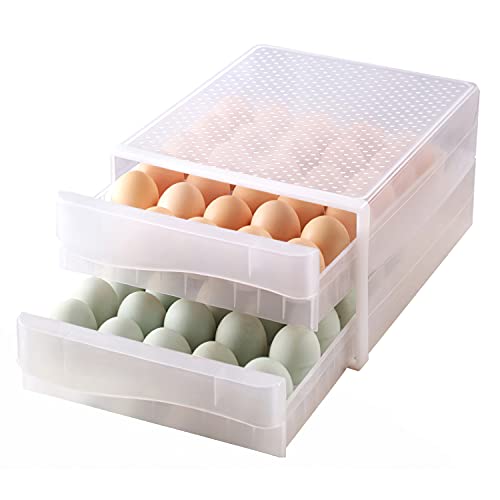
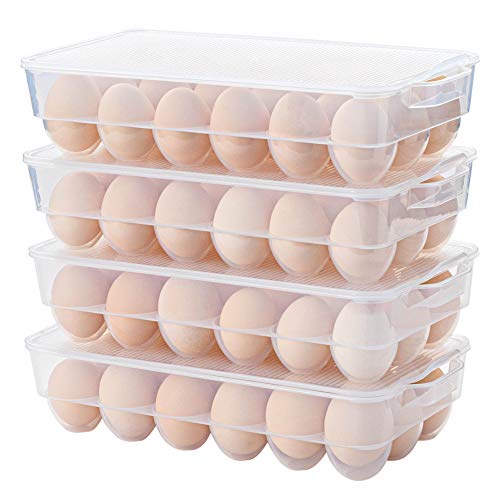
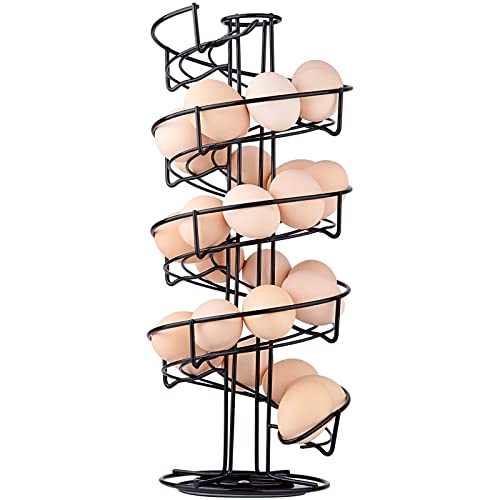
Egg Holder for Refrigerator, 2 Packs Egg Holder BPA Free Egg Storage Carrier Deviled Egg with Lid Egg Container for Refrigerator Egg Organizer Keep Fresh Egg Storage Container in Refrigerator ToresanoEgg Holder for Refrigerator, THIPOTEN 60 Grid Eggs Storage Container for Refrigerator, Perfect Household Egg Organizer for a Hobby FarmClear Plastic Egg Holder for Refrigerator, Stackable Egg Storage Trays With Lid & Handles, Plastic Egg Box Carrier 4 Pack, BPA-Free Egg Storage Container for 18 EggsEgg Holder For Refrigerator – Auto Rolling Egg Organizer 3 Layer – Stacked Egg Tray Fridge Egg Storage Container – Hold 24 EggsToplife Spiral Design Metal Egg Skelter Dispenser Rack, Storage Display Rack, BlackRolling Egg Holder Dispenser,Refrigerator Automatically Rolling Egg Storage Container, 2 Tier Rolling Egg Dispenser, Space Saving Egg Tray For Refrigerator with 2 egg mold(1)



However, it’s always a good idea to check for signs of spoilage before consuming. A simple test is to use the egg float test. Simply place the egg in a bowl of water. If it floats, it’s likely spoiled and should not be eaten.
FAQs on Egg Preservation
Q: Can I use store-bought eggs for waterglassing?
A: It’s not recommended to use store-bought eggs for waterglassing. These eggs are usually washed, which removes the protective bloom, making them less suitable for this preservation method.
Q: Are waterglassed eggs safe to eat raw?
A: While waterglassing preserves eggs, it doesn’t eliminate all potential bacteria. Hence, it’s safer to cook waterglassed eggs before consumption.
Q: Can waterglassed eggs be used the same way as fresh eggs?
A: waterglassing eggs changes the texture and consistency of your eggs. We love our waterglassed eggs scrambled or for baking. However, waterglassed eggs don’t do well for things that need to hold up shape such as fried eggs or omelets.
AVLA 2 Pack Chicken Egg Collecting Apron, Child 3 Pockets Egg Gathering Holding Apron, Kid Size Farmhouse Egg Carrier Apron for Hens, Duck, Goose EggsMZCXMAO Egg Apron, Egg Collecting Apron,Egg Gathering Apron,Egg Apron for Fresh Eggs,Egg Apron for Fresh Eggs Women (Teenager-Unisex, Hen)Dkocva Elkayconcepts Egg Collecting Apron with 12 pockets, Egg Apron, Egg Apron for Fresh Eggs, Egg Gathering or Egg Holding Apron, Chicken Egg Apron, White, Adult Size2 Pcs Egg Apron for Fresh Eggs Hen Duck Goose Eggs Holder Aprons Adjustable Gathering Apron with Pockets for Home Kitchen (12 Pockets)Plum Hill Boy’s Egg Collecting and Gathering Apron with Green Farm Tractor Design for Children with Backyard Chickens or Ducks with 8 Pockets for Easy Carryinglongsen Egg Apron 2 Pack(Adult 12 Pockets + Child 3 Pockets), Gathering and Collecting Chicken Duck Goose Egg, Suitable for Housewife Farmhouse Kitchen Restaurant Parent-Child Activities, Rooster, Hen


Q: Can I freeze eggs for long-term preservation?
A: Yes, eggs can be frozen for up to a year. However, you’ll need to crack the eggs and beat them before freezing.
Q: How can I tell if a preserved egg has gone bad?
A: Besides the float test, another sign of a spoiled egg is a foul smell. If an egg gives off a sulfuric or rotten smell when cracked, it’s best to discard it.
In conclusion, preserving eggs long-term doesn’t have to be a daunting task. With methods like waterglassing, you can keep your eggs fresh for an extended period without compromising their taste and texture. Happy preserving!


Charlene has been dabbling in and learning about the homesteading lifestyle for almost 20 years. She recently started a real-world homestead with her extended family and is excited to share 20+ years of knowledge and experience with the world!
While she certainly doesn't know everything about homesteading and is learning more every day, she is excited to learn and grow along with YOU!
Charlene blogs about about homesteading at https://secretlifeofhomesteaders.com/.