
Here at The Secret Life of Homesteaders, we know this is the time of year that you are probably you asking yourself, “Should I plant beets or turnips in my garden this year?” When debating beets vs turnips, know that both vegetables have their pros and cons.
But which one is right for you?


Both of these root vegetables are delicious when eaten fresh from the garden, but they both have different growing needs and benefits.
Keep reading to find out the differences between beets and turnips, as well as the pros and cons of each, so you can make the best decision for your garden.
This article may contain affiliate links. Please see our disclosure policy for more details.
What Is The Difference Between Beets And Turnips?
When asking yourself if you should grow beets vs turnips, you will first want to know the answer to one question.
What is the difference between beets and turnips?
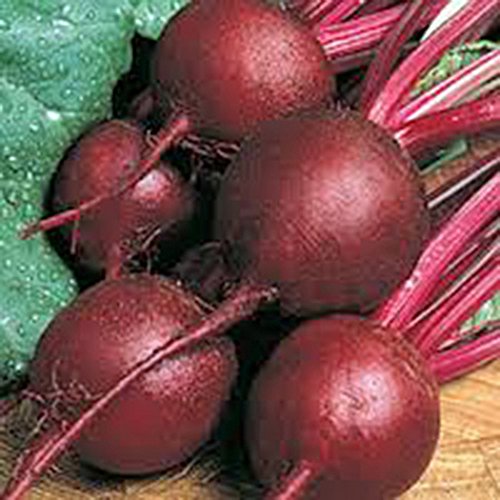
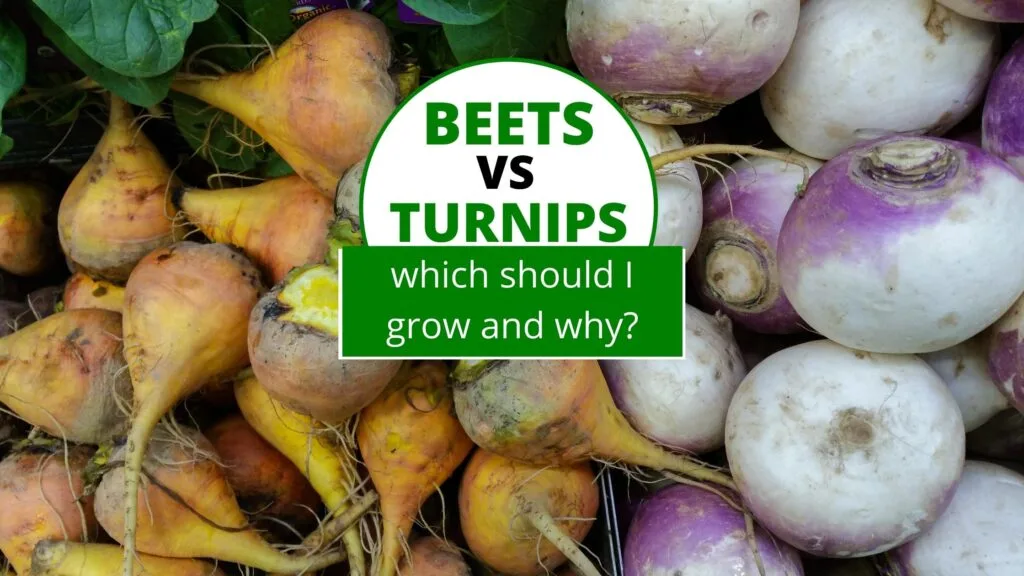
Beets are a root vegetable that comes in many colors, including red, yellow, and white. They have a sweet taste and are often used in salads or as a side dish.
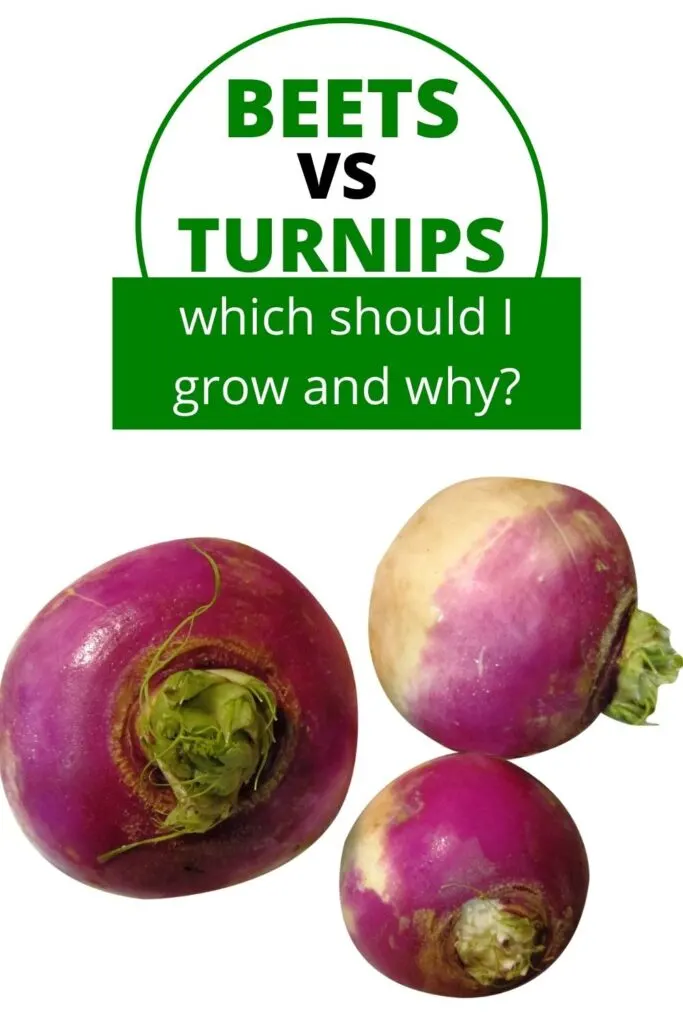
Turnips, on the other hand, are white or purple on the outside with a white flesh on the inside. This root vegetable will have a slightly bitter taste and is often used in soups or stews.
Pros And Cons Of Beets Vs Turnips
There are pros and cons to growing beets vs turnips and vice-versa. Let’s take a closer look at the pros and cons of each vegetable.
Pros and Cons of Growing Beets
Pros:
- Beets are easy to grow and don’t require much maintenance.
- Beets are often thought of as a sweet vegetable and can add a sweet element to your dishes.
- This root vegetable is a great source of vitamins and minerals.
- Beets are very high in fiber and can help keep you regular.
- Beets contain nitrates which can help widen blood vessels.
- Beets can help maintain healthy blood pressure and blood sugar levels.
- Beets have been shown to improve athletic performance and brain function.
- Beets can be stored for long periods of time without losing their flavor or nutrients.
- You can eat the whole beet plant including the root and the leaves (beet greens).
- Beet greens have fiber, protein, and vitamins C, K, and B9.



Cons:
- Beets may not do well in hot weather climates.
- The leaves of the beet plant can be poisonous if eaten in large quantities.
- Beets can be difficult to digest if you are not used to eating them.
- Beets can stain your hands and clothing if you are not careful.
- Beets are susceptible to diseases, insects, and abnormal growth.
Pros and Cons of Growing Turnips
Pros:
- Turnips are very versatile and can be used in a variety of dishes.
- This vegetable is tolerant to cold weather and can even be grown in winter.
- Turnips are a good source of vitamins and minerals.
- Turnips are high in fiber and can help keep you regular.
- Turnips contain antioxidants which can help protect your cells from damage.
- Turnips can be stored for long periods of time without losing their flavor or nutrients.
- You can eat the whole turnip plant including the root and the turnip greens.
- Turnips are high in many vitamins, including vitamin K, A, C, E, B1, B2, B3, B5, B6, and folate (which, incidentally, is also a B vitamin).
- Turnips are high in minerals such as manganese, potassium, magnesium, iron, calcium, and copper.
- Turnips are a good source of omega-3 fatty acids


Cons:
- Turnips have a short shelf life and should be eaten within a few days of being harvested unless you keep them in the fridge, at which point they can last up to 5 months.
- Turnips can be difficult to digest if you are not used to eating them.
- Turnips are susceptible to diseases, insects, and abnormal growth.
- Turnips may not do well in hot weather climates.
Overall, unless you are looking for a specific flavor or vitamin content, beets and turnips are pretty equal.
Free Garden Planning Worksheets
Do you need help planning out your garden? It’s never too early (nor too late) to start planning your garden.
We can help take the stress, anxiety and overwhelm out of garden planning with our free Garden Planning Worksheets.
Make planning your garden easier than ever with your very own copy!
Learn what’s inside the free printable gardening planner here.
Or Grab your free Garden Planning Worksheets NOW!!
Should You Grow Beets Or Turnips In Your Garden?
When it comes to beets and turnips, there is a block in people’s minds that they are essentially the same because they grow very similarly in the garden.
It is true that turnips and beets are both cool weather plants that because they are root vegetables, you pull from the ground when you want to eat them. Unless of course you just need a little bit of the green top (since turnip greens and beet greens are also edible).
That being said, they are in fact different from many of their points of use.
Read Also – Companion Planting Guide For Vegetable Gardens
Using Turnips Vs Beets From a Homesteading Standpoint:
The idea of homesteading is to create as much independence as possible in the world we live in.
Obviously, we don’t manufacture our own cars and phones and the such (so we either do without or purchase such things) but one thing we can do is grow much if not all of our own food, plus some extra that we could sell for those items that we do not make on sight.

Turnips and Beets are both good food sources that can be grown on your homestead. So does putting turnips and/or beets make sense for your homestead?
A homestead item needs to be able to do one of the two things: either give you food/life or make you money.
More Gardening And Homesteading Resources
If you’re learning about beets and turnips in the garden, you’re probably learning about other gardening and homesteading topics as well.
Check out these resources!



Are Beets Or Turnips Easier To Cook/Prep Food With?
Grow what you eat. When it comes to the kitchen, beets and turnips are not interchangeable (except for greens) in food:
From a culinary standpoint, the turnip and beet are different. From a density, texture, and moisture content they are both basically identical. This means cooking methods and times will match up and be the same for either one.
That being said depending on which one you pick it will change the flavor of your dish.

![Hello! 150 Beet Recipes: Best Beet Cookbook Ever For Beginners [Book 1]](https://m.media-amazon.com/images/I/41dtoUsLVSL._SL500_.jpg)


A beet is sweet. In fact so sweet that there are beets (sugar beets) that can actually be processed into sugar that you can use for baking. So if you want to use your vegetable as a way to sweeten things up then beet will defiantly be the better pick of the two.
That being said adding a beet will not be like adding honey to a dish, it is not that sweet if you are eating it whole.
A turnip is a great add-in if you want your dish to bite back a bit. This bite will be similar to eating rutabaga, parsnip, or broccoli stems. So we are not taking a dog fight in your mouth, but it won’t be a sweet add in either.
If you need your ingredient to be more savory and keep things from going into a possible dessert category you will want to pick the turnip.
As far are the greens these are both edible and interchangeable. If your recipe call for one but you only have the other it won’t dramatically change the taste. These greens can be used anywhere you have been using swiss chard.

So toast salads for young leaves and boiling up for large old leaves works great.
When it comes to choosing which to grow, I always recommend you grow whichever one you eat. If you eat beets then grow beets, if you eat turnips then grow turnips if you eat both then grow both.
There is nothing worse than having a bunch of something in your garden that you don’t like. If you don’t know if you like them then find some that someone else grew and try them out.
Don’t judge on just one recipe, get at least 5-6 before seeing if you like them enough to justify the time and effort and space they will need on your homestead and/or garden.
Do Turnips Or Beets Make More Money At A Farmer’s Market?
From a sales standpoint, they are about the same on a USA national average. Mind you the prices are not going to make you pick to grow a ton of extra because you will be making a bunch of money off of them.
That being said if your local market has a need of beets or turnips or both then by all means you need to grow enough to fill that market need unless there is a product that uses the same resources that can bring in more profit.
So this is going to take some personal research on your part to find out if there is enough money in either to justify the time and space to grow some.
Perhaps you already have good restaurant connections to some chiefs who use one of your other products and they could also use turnips or beets for their food.



Other people eat beets and turnips, it is just a matter of whether or not you can sell them at a profit. If you can then do it and realize it may take some creativity on your part.
Health Benefits Of Beets Vs Turnips
Before I start this section please understand that I am not a doctor and am not recommending these as a way to treat or cure things, I am just reporting that there are people who use these veggies as solutions for things as recommended by their personal medical professional.
Beets can be used to control blood sugar levels because of the fiber in it. Fiber also keeps you ‘regular’ for your bathroom visits and can help lower your cholesterol.
All good things if you have problems with those.

As a general rule, this also means you will have an easier time maintaining a healthy weight, which will help other parts of your body not wear out as fast.
Turnips are used to reduce weight in some. They are also used in stone treatments, so kidney stones and gallbladder stones are examples of these.
They are also used to help cure anemia.
The reason I bring these up is because if you are using these medicinally then it makes sense for you to grow them to ensure you have a good source of your ‘medication’.
I would never assume that supply chains will allow you to obtain any medication and if you have the ability to grow your own medicine, that would definitely fall into the independence that you are trying to achieve with being a homesteader.
Also if you have a family history of any of these problems you might consider adding them to your diet simply because they are food anyway and it is likely to not hurt to use turnips or beets to maybe stay off some of these problems.


Benjamin has been dabbling in and learning about the homesteading lifestyle for almost 30 years. He recently started a real-world homestead with his extended family and is excited to share 20+ years of knowledge and experience with the world!
While he certainly doesn't know everything about homesteading and is learning more every day, he is excited to learn and grow along with YOU!
Benjamin blogs about about homesteading at https://secretlifeofhomesteaders.com/.