
If you’re always looking for simple homemade chicken feed recipes, add this recipe for chicken feed DIY to your list of backyard chicken owner hacks!
If you’re like most chicken owners, you’re always looking for ways to save money and keep your flock healthy.
Owning chickens is a great way to get fresh eggs daily, but it can also be expensive if you are buying chicken feed from the store. Not only will this save you money, but it will also ensure that your chickens are getting the best possible nutrition.

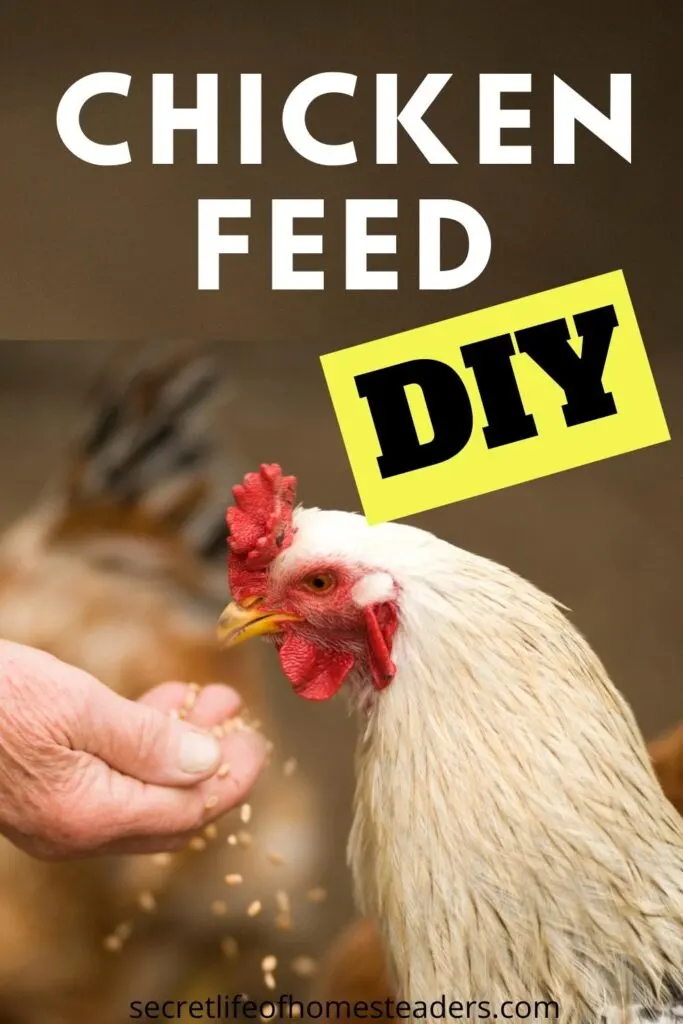
One great way to do both of those things is by making your own chicken feed. DIY chicken feed is easy to do and it can be a lot cheaper than buying commercial feed.
In this post, we’ll show you how to make your own chicken feed, and we’ll also share some recipes that will help keep your chickens healthy and happy.
So, if you’re looking for a more affordable and healthy way to care for your chickens, read on!
This article may contain affiliate links. Please see our disclosure policy for more details.
Chicken Feed DIY
When learning how to take care of chickens, it’s a good idea to consider a good chicken feed DIY.
Mixing chicken feed can be a rewarding and satisfactory pursuit. It’s an excellent and healthy way to provide the highest nutrition for your birds. You know what goes in it and there won’t be any fillers or other unnecessary ingredients that we often find in commercial feed from Amazon or your local feed store.
This is especially important for those who care about organic feed or avoiding non-GMO ingredients.

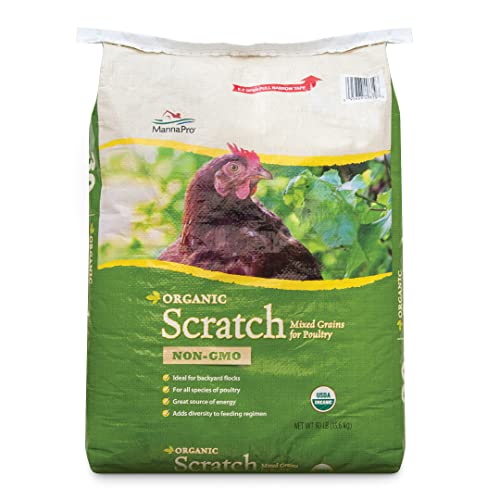
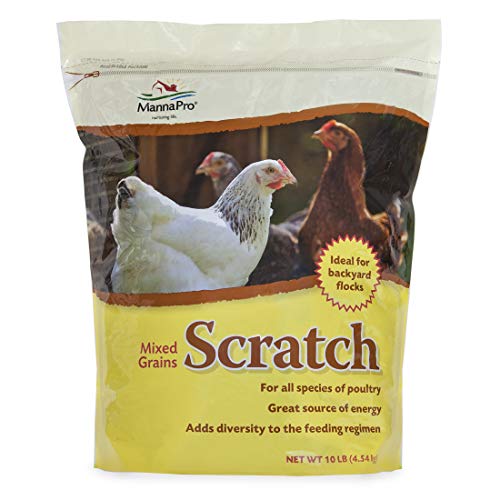
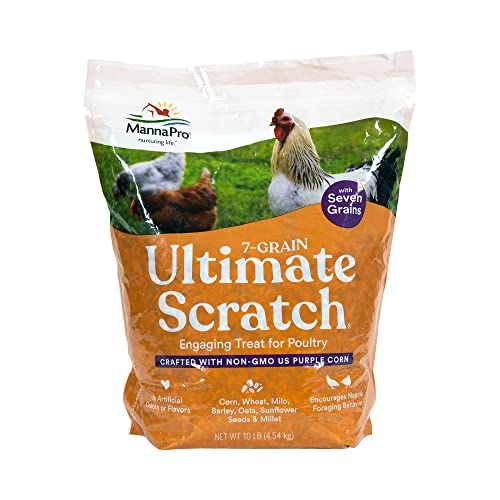
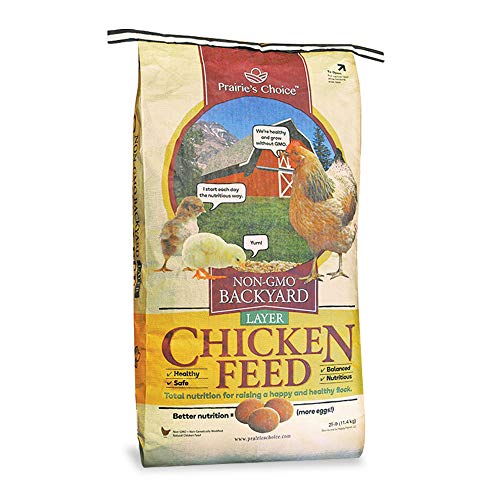
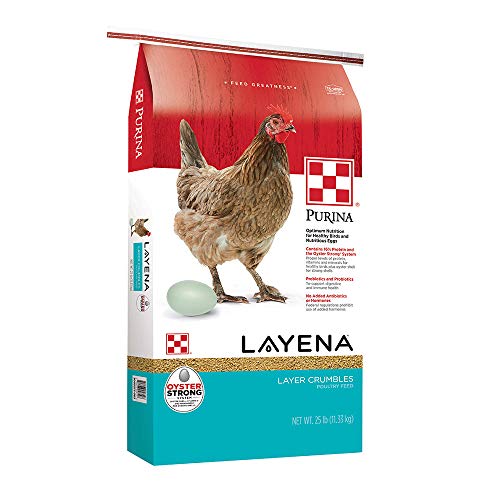
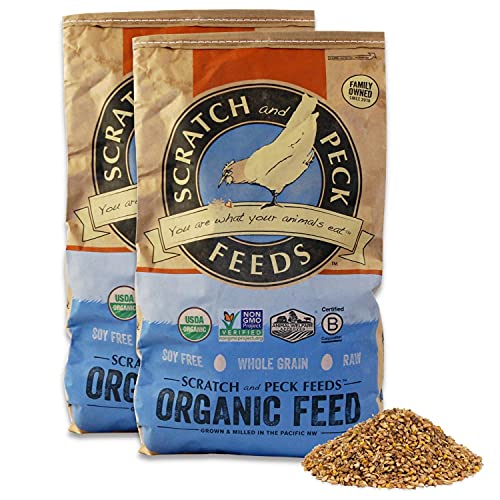
But, you have to consider the kind of chickens you have along with their age, gender, and what your purpose is for having them. For example, baby chicks will require different nutrients than full-grown laying hens.
You will also want to consider whether or not your chickens are free-range or cooped up full time.
Free-range chickens will have an easier time finding bugs and plants to supplement their own nutritional deficits than backyard chickens who are cooped up full time.


Then you want to think about ensuring there’s an array of things like protein, carbohydrates, vitamins, minerals, and amino acids, just to name a few.
Making your own chicken feed isn’t particularly difficult. But, to ensure you have a healthy flock of birds, you have to study up on what’s appropriate, what’s too much, and what can happen if they don’t receive enough.
What About DIY Duck Feed? Can Ducks Eat Chicken Feed?
As any avid ducks fan knows, ducks are voracious eaters and will pretty much try to devour anything that comes their way. This includes chicken feed, which ducks are known to gobble up given the chance.
But is chicken feed actually good for ducks?

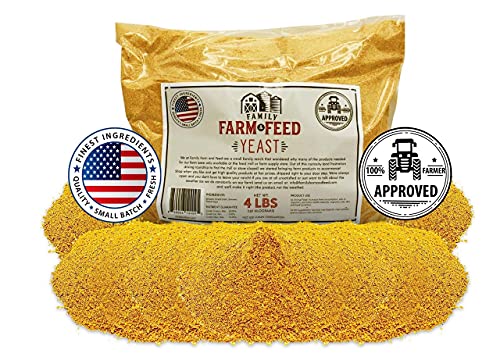
As it turns out, ducklings need extra niacin in their diet, so if you’re going to feed them chicken feed, make sure to add 5% brewers yeast to the mix.
Medicated chick feed should also be avoided, as it can be harmful to ducklings.
If you’re interested in making your own duck feed, feel free to follow any recipe for DIY homemade chicken feed and then add a bit of brewer’s yeast.
Things To Consider Before Making Your Own Chicken Feed
Before creating a blend of food for your feathered friends, you have to understand the kind of chicken you have and what its general nutrition requirements are. Typically, the larger the chicken, the more food it will require, along with a greater nutrition content.
For instance, ones bred for meat, called broilers, need a lot of protein in their diets. Laying chickens will need massive amounts of calcium. Then, you should think about the age and sex of your chickens.


Younger chicks, including baby chicks and pullets, need more protein than mature hens but older birds must have more food. Males and females will naturally have different nutrition requirements.
For example, roosters are bigger but don’t lay eggs, so they will require a heavy protein diet whereas females (laying hens) need protein but much more calcium in their feed mix.
Nutrients Appropriate for Poultry
Once you estimate the kinds of chickens you have along with their age, sex, and general nutritional requirements, then you want to consider the specifics of the nutrients. Avoid cutting corners at all costs to ensure you provide a well-rounded diet that your chickens will love.
- Amino Acids: Since chickens are unable to synthesize certain amino acids, you will have to provide these as a supplement you mix into the feed. Things like arginine, leucine, lysine, methionine, threonine, tryptophan, and valine are just some of these.
- Carbohydrates: Just like people, cats and dogs, chickens need carbohydrates for energy. Things like corn (cracked corn for chickens or regular, fresh corn), wheat, barley and oats will be excellent carbs for chickens.
Read Also – Can Chickens Eat Whole Wheat? - Fat: Egg-laying and broiler chickens will require a certain amount of fat content in their diet. They can get this from things like vegetable oil and corn.
- Minerals: Calcium, phosphorous, magnesium, potassium, sodium and chloride are all essential nutrients chickens must have. It helps with their development and ensures their overall health. You can add oyster shells, eggshells, or limestone to boost calcium and make a high-quality layer feed, for instance.
Alternatively, if you have a mixed flock that consists of more than just laying hens, you can provide your calcium free choice (in a bowl or bucket separate from the rest of the feed) so the birds can regulate their own calcium needs. - Protein: Protein will intensely rely on the type of chicken you have, its age and gender. Fish meal, mealworms, manufactured cat food, peas, sprouted lentils and pumpkin seeds can all be fantastic sources of protein for chickens.
- Vitamins: Egg production and plump meat are due to a high level of vitamins in a chicken’s diet. They will get a host of these from many of the things you’re going to add already. But, if you want to boost the vitamin intake, give your chickens things like kelp or flaxseed.
Further Considerations for Blending A DIY Chicken Feed Mix
While it may seem practical to blend one type of feed for all the chickens in your coop, you may deprive one kind of chicken to satisfy another. This is why it’s advisable to create a basic all-around feed that you can adjust with supplementation as needed.
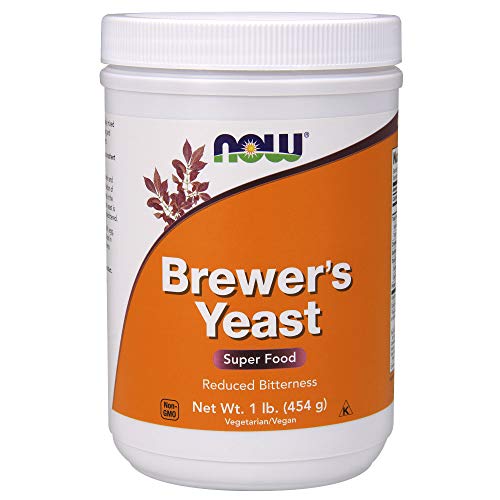
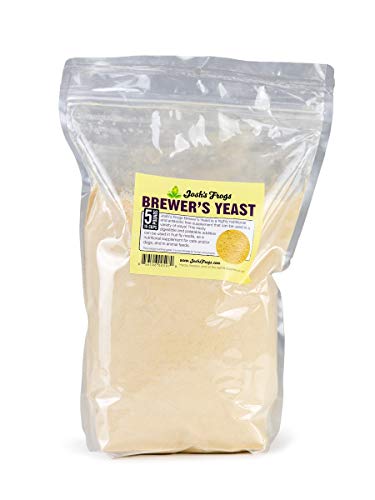
For instance, you can add black oil sunflower seeds (dry or sprouted) to increase protein, minerals and fat. Brewer’s yeast is also a great source of protein and various vitamins and minerals.


Alternatively, you can give cherry pits for additional amino acids and vitamins. These are all great ways to supplement your backyard chickens’ nutritional needs.
Mixing in a dash of diatomaceous earth will keep their digestive tracts from developing parasites and it will keep insects out of the feed. Pumpkin seeds are also a great way to keep backyard chickens parasite-free.

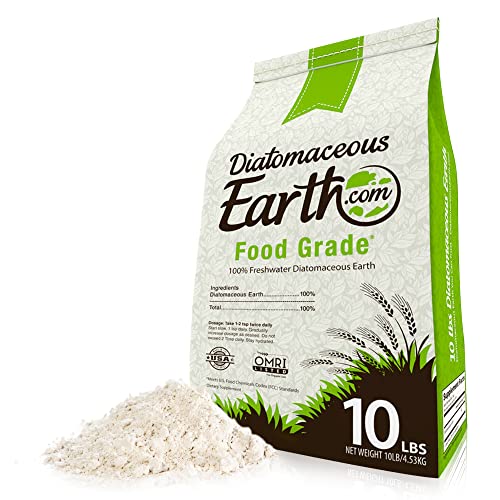


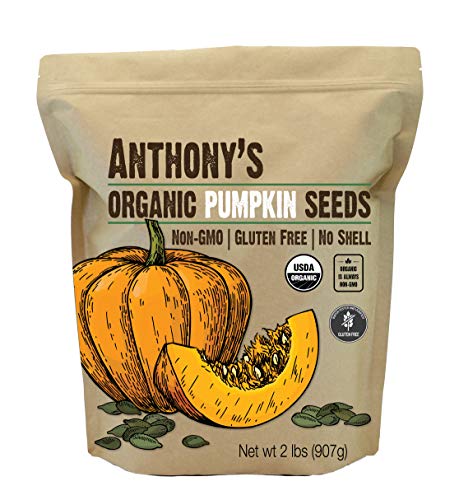
Also, don’t forget to add grit and greens from time to time to help the birds digest their food, especially if your birds are cooped up all the time. Since chickens do not have teeth, they must have access to dirt or grit in order to properly digest their feed.
Sample Chicken Feed DIY Recipe
The following is a typical homemade chicken feed recipe for average size adult female chickens. You can adjust the amounts and ingredients particular to your flock. A typical bag of feed is around 50 pounds and, on average, you’ll feed one chicken about three to five bags per month.
- 10 lbs Corn Kernels
- 10 lbs Whole Wheat
- 5 lbs Grit
- 5 lbs Oats
- 5 lbs Barley
- 5 lbs Peas or Lentils
- 2 oz Fish Meal
- 2 oz Mealworms
- 2 oz Crushed Oyster Shells or Eggshells
- 2 oz Diatomaceous Earth
- 1 oz Salt (optional)
- 1 oz Kelp Meal
- 1 oz Amino Acid Supplement (optional)
- Polish off daily feed with fresh fruit and vegetables from your garden or various kitchen scraps
If you free range your chickens, they will probably require less feed mix in the summer months and more in the winter months.
Unless, of course, you decide to dabble in sprouting things like whole wheat, alfalfa, lentils, or other legumes, or fermenting chicken feed, which will stretch your feed mix even further.


When you give your chickens homemade feed, they’ll feel like it’s Christmas every day. Besides, you’ll burgeon with pride and can be confident in what you’re feeding your flock.
DIY chicken feed can also be a resourceful way to save money. And let’s be honest, all chicken keepers and homesteaders are looking for more ways to save money.


Charlene has been dabbling in and learning about the homesteading lifestyle for almost 20 years. She recently started a real-world homestead with her extended family and is excited to share 20+ years of knowledge and experience with the world!
While she certainly doesn't know everything about homesteading and is learning more every day, she is excited to learn and grow along with YOU!
Charlene blogs about about homesteading at https://secretlifeofhomesteaders.com/.
Becky ~ The Vixens Den
Tuesday 25th of July 2023
This is so interesting! I had no idea that chicken feed could be so complex. Thank you so much for sharing with us at Whimsy Home Wednesday!